


Hospital Operations Management: Complete Workflow Guide for Modern Healthcare Facilities
Introduction
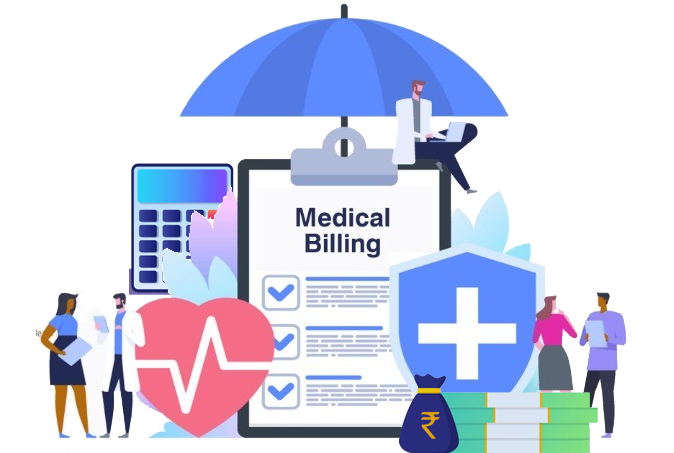
Medical Billing System in HMS is no longer just about generating invoices.
In modern healthcare, billing directly impacts revenue control, operational efficiency, patient experience, and financial visibility.
Many hospitals still struggle with:
- Billing errors
- Revenue leakage
- Delayed payments
- Insurance claim issues
- Manual dependency
- Disconnected departments
These problems do not only affect finance teams.
They affect the entire hospital workflow.
This is where a Medical Billing System inside a Hospital Management System (HMS) becomes essential.
A modern billing system helps hospitals automate processes, improve accuracy, reduce losses, and maintain complete financial transparency across departments.
Related Blogs
Book an Appointment
These inefficiencies not only slow hospital performance but also directly affect patient experience, staff productivity, revenue management, and decision-making quality.
As healthcare systems become increasingly digital and patient expectations continue rising, Hospital Operations Management has evolved into one of the most important foundations of modern healthcare infrastructure.
Hospitals are no longer evaluated only on medical expertise. They are also evaluated on:
- Workflow speed
- Operational efficiency
- Service coordination
- Response time
- Data visibility
- Patient experience
Efficient operations management helps hospitals create a connected, scalable, and data-driven healthcare environment.
What is a Medical Billing System in HMS
A Medical Billing System in HMS is a centralized digital solution that manages:
- Patient billing
- OPD/IPD charges
- Insurance processing
- Package billing
- Pharmacy billing
- Lab billing
- Payment tracking
- Revenue reporting
It connects all departments into one integrated workflow.
Instead of manual calculations and disconnected software, hospitals operate through a unified financial system.
Why Hospital Billing Management Matters
Billing is the financial backbone of every hospital.
Without a structured billing system, hospitals often face:
Hospital operations directly impact:
| Problem | Impact |
|---|---|
| Manual billing errors | Revenue loss |
| Delayed invoice generation | Slow cash flow |
| Untracked services | Billing leakage |
| Duplicate entries | Financial confusion |
| Insurance claim delays | Payment bottlenecks |
| No centralized data | Poor visibility |
A strong billing system helps hospitals maintain operational and financial control.
Core Functions of a Medical Billing System
1. Patient Registration Billing
The process begins during patient registration.
The system automatically:
- Creates patient billing records
- Generates unique patient IDs
- Links consultations and services
- Maintains payment history
This reduces duplicate records and manual errors.
2. OPD Billing Management
For outpatient services, the system handles:
- Consultation charges
- Doctor fees
- Lab charges
- Procedure billing
- Pharmacy billing
Everything is updated in real time.
3. IPD Billing Management
Inpatient billing is more complex because it includes multiple services.
The billing system tracks:
- Room charges
- Nursing charges
- Procedures
- Diagnostics
- Medicines
- Consumables
- Doctor visits
This creates accurate and transparent billing.
4. Pharmacy Billing Integration
An integrated pharmacy billing system automatically syncs:
- Medicine purchases
- Prescription-based billing
- Stock updates
- GST calculations
This prevents inventory mismatch and billing inconsistencies.
5. Laboratory Billing
Lab billing automation helps hospitals:
- Generate test bills instantly
- Connect reports with patient records
- Avoid duplicate billing
- Track diagnostics revenue
6. Insurance & TPA Billing
Insurance processing is one of the biggest operational challenges in hospitals.
A billing system simplifies:
- Claim generation
- TPA processing
- Package mapping
- Document management
- Payment tracking
This reduces claim rejection and processing delays.
Revenue Cycle Management in HMS
Revenue Cycle Management (RCM) refers to the complete financial workflow of a hospital.
It includes:
Patient Registration → Service Delivery → Billing → Claims → Payments → Reporting
A modern HMS helps automate this entire cycle.
Key Benefits of an Automated Billing System
1. Revenue Leakage Reduction
Many hospitals lose revenue because services are not billed properly.
Automation ensures:
- Every service is tracked
- Charges are updated automatically
- No missing entries
2. Faster Billing Process
Manual billing consumes time and increases patient waiting.
Automated systems help generate invoices instantly.
3. Better Financial Visibility
Hospital management gets access to:
- Revenue dashboards
- Department-wise income
- Outstanding payments
- Real-time reports
This improves decision-making.
4. Reduced Human Errors
Automation minimizes:
- Duplicate entries
- Wrong calculations
- Missing charges
- Data inconsistencies
5. Improved Patient Experience
Faster billing creates smoother patient discharge processes.
This improves trust and operational efficiency.
Features to Look for in a Hospital Billing System
When selecting a billing solution, hospitals should evaluate:
Essential Features
- Integrated OPD/IPD billing
- Pharmacy integration
- Lab integration
- Insurance management
- GST support
- Multi-user access
- Real-time reporting
- Automated invoice generation
- Cloud accessibility
- Role-based permissions
Cloud-Based Billing Systems vs Traditional Billing
| Traditional Billing | Cloud-Based Billing |
|---|---|
| Manual dependency | Automated workflows |
| Limited access | Anywhere accessibility |
| Data silos | Centralized data |
| High maintenance | Scalable infrastructure |
| Slow reporting | Real-time analytics |
Cloud-based HMS platforms provide better flexibility and operational control.
Common Challenges Hospitals Face Without Billing Automation
1. 1. Billing Leakage
2. 2. Delayed Reporting
3. 3. Operational Confusion
4. 4. Lack of Financial Transparency
Role of AI in Modern Medical Billing Systems
AI-powered billing systems help hospitals with:
- Smart billing suggestions
- Error detection
- Automated alerts
- Predictive revenue insights
- Faster claim processing
This improves both speed and accuracy.
How Integrated HMS Improves Billing Efficiency
A connected HMS links:
- Front desk
- Doctors
- Pharmacy
- Lab
- Billing department
- Inventory
This creates one unified operational ecosystem.
The result:
- Faster workflows
- Better coordination
- Accurate billing
- Improved control
Why Hospitals Are Moving Toward Smart Billing Systems
Modern healthcare requires:
- Speed
- Accuracy
- Transparency
- Automation
- Scalability
Traditional billing methods cannot support growing operational complexity.
Hospitals now need intelligent systems that improve both workflow and financial management.
MedoNext HMS for Billing & Revenue Management
MedoNext HMS
MedoNext HMS helps hospitals streamline billing and revenue operations through:
- Integrated billing workflows
- Automated financial tracking
- Real-time revenue monitoring
- Pharmacy & lab connectivity
- Insurance management support
- Centralized reporting
The platform is designed to reduce operational complexity while improving financial visibility and workflow control.
7 Powerful Benefits of Medical Billing System in HMS for Hospitals
In today’s healthcare environment, hospitals cannot afford inefficient billing workflows. Even small billing inaccuracies can lead to significant financial losses over time. A modern Medical Billing System in HMS helps hospitals create a more structured and transparent revenue process by automating calculations, tracking services accurately, and reducing dependency on manual operations. This improves both operational efficiency and financial stability.
As hospitals continue to expand their services, managing billing across departments becomes increasingly complex. An integrated billing system ensures that consultations, diagnostics, pharmacy purchases, room charges, and insurance claims are connected within one centralized platform. This not only improves coordination between departments but also provides hospital management with better financial visibility and faster decision-making capabilities.
Conclusion
A Medical Billing System is no longer just an accounting tool.
It is a critical operational and financial control system for modern hospitals.
Hospitals that invest in automated billing systems gain:
- Better revenue control
- Faster operations
- Reduced errors
- Improved transparency
- Stronger workflow management
As healthcare operations become more complex, integrated and intelligent billing systems will become essential for sustainable growth.
Explore how integrated hospital workflow systems can improve operational visibility, coordination, efficiency, and digital healthcare management.
Book a Free Demo Now or 📞 Talk to Our Experts : +919981663960, +918239389629
All You Need to Know All You Need to Know FAQs
What is a Medical Billing System in HMS
How does billing automation reduce revenue leakage
Why is integrated billing important in hospitals
What are the benefits of cloud-based billing systems
Can HMS improve insurance claim processing
Transform Your Healthcare
Journey with Smart Digital Solutions
Digital healthcare solutions simplify clinic operations, improve patient engagement, and ensure secure data management—making your healthcare journey smarter and more reliable.